All Grown Up
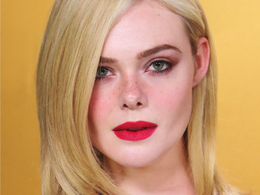
Former childhood star Elle Fanning continues to stand out by choosing daring and unique roles that showcase her full acting range.
Elle Fanning has grown up on screen. Born in Conyers, Georgia, in April 1998, she was already acting before most children her age had learned to write in full sentences. The younger sister of Dakota Fanning, Elle carved her own path early, appearing in films such as I Am Sam (2001) and Babel (2006).
By her teens, she had evolved into one of the most striking performers of her generation, with her breakout role coming in Sofia Coppola’s Somewhere (2010), a subtle, atmospheric portrait that highlighted her ability to balance innocence with emotional depth. From there, she built an eclectic filmography: Maleficent’s dark fairytale world opposite Angelina Jolie (2014 and 2019), the poignant indie 20th Century Women (2016), and Nicolas Winding Refn’s stylish The Neon Demon (2016), which cemented her as a daring actress willing to embrace risk.
Television also brought acclaim. The Great (2020–2023), in which she played Catherine the Great, showcased her comic sharpness, resilience and charm, earning her Golden Globe and Emmy nominations.
Last year, Fanning helped elevate A Complete Unknown, an Oscar nominee for Best Picture, playing the love interest for Timothée Chalamet’s Bob Dylan.
Off screen, the 27-year-old Fanning has emerged as a style icon. From red-carpet couture to bold streetwear, she has become a regular muse for designers such as Miu Miu, Gucci and Valentino. Her ability to blend elegance with experimentation has positioned her as one of the most exciting fashion figures of her generation.
As for what lies ahead, 2025 is already shaping up to be significant. She’s the lead in Sentimental Value, a moving drama about fractured family relationships, directed by Andrew Haigh. She is also attached to Predator: Badlands, a bold reimagining of the legendary sci-fi franchise, where her presence promises to bring fresh perspective and intensity.
Q&A
Your new film, Sentimental Value, is already generating a lot of buzz. What drew you to the role?
I was instantly taken with the script—a story about the ways family wounds can echo through generations. My character is caught between loyalty and self-preservation, and that duality fascinated me. Andrew Haigh has such a gift for exploring intimacy and vulnerability on screen, so I knew it would be handled with care.
I was instantly taken with the script—a story about the ways family wounds can echo through generations. My character is caught between loyalty and self-preservation, and that duality fascinated me. Andrew Haigh has such a gift for exploring intimacy and vulnerability on screen, so I knew it would be handled with care.
For me, it was about diving into emotions that are messy and sometimes uncomfortable, and showing how they coexist. It’s not a glossy portrait of family life, so it came with a layer of complexity that really intrigues me.
You’ve said working with Stellan Skarsgard was something you’ve wanted to do for a long time.
He’s an actor who carries with him a sense of gravity and status that not everyone has. He’s an icon for actors of all generations, but his own admission isn’t perfect and he often finds flaws in his own performance. I guess that’s what made him perfect for this role, too. It was certainly an engaging experience and everything I thought it would be.
This is a foreign-language film. How did you cope with that?
Again, it’s that idea of moving outside of my comfort zone, and that’s something I always want to do. Starring in a foreign-language film is much like watching one. It’s an unusual thing to come to terms with at first, yet after a while you are very comfortable in the mechanic.
He’s an actor who carries with him a sense of gravity and status that not everyone has. He’s an icon for actors of all generations, but his own admission isn’t perfect and he often finds flaws in his own performance. I guess that’s what made him perfect for this role, too. It was certainly an engaging experience and everything I thought it would be.
This is a foreign-language film. How did you cope with that?
Again, it’s that idea of moving outside of my comfort zone, and that’s something I always want to do. Starring in a foreign-language film is much like watching one. It’s an unusual thing to come to terms with at first, yet after a while you are very comfortable in the mechanic.
And after this you’re stepping into a completely different world with Predator: Badlands. What excited you about that project?
Honestly, the idea of being part of a franchise that’s so iconic and steeped in pop culture history felt surreal. I grew up watching those films with my dad and Dakota, so it was already in my bloodstream.
Honestly, the idea of being part of a franchise that’s so iconic and steeped in pop culture history felt surreal. I grew up watching those films with my dad and Dakota, so it was already in my bloodstream.
Yet what really hooked me was how this version reinvents the mythology. It’s less about spectacle and more about survival and fear. My character isn’t a typical action hero—she’s flawed, vulnerable and thrown into extraordinary circumstances. That gave me something to hold onto emotionally while also embracing the physicality of the role.
And I have to admit, training for it was fun. Learning stunts, being out in the elements, pushing myself beyond what I thought I could do. It was exhausting but strangely addictive.
And I have to admit, training for it was fun. Learning stunts, being out in the elements, pushing myself beyond what I thought I could do. It was exhausting but strangely addictive.
Having started so young, how do you look back on your journey from child actress to adult lead?
It’s been both gradual and sudden. On one hand, I don’t remember a time when acting wasn’t part of my life. It feels woven into my DNA. On the other hand, the transition to adult roles was abrupt because people suddenly expected me to “prove” I wasn’t just a child actor anymore.
It’s been both gradual and sudden. On one hand, I don’t remember a time when acting wasn’t part of my life. It feels woven into my DNA. On the other hand, the transition to adult roles was abrupt because people suddenly expected me to “prove” I wasn’t just a child actor anymore.
I’ve been very intentional about my choices. Working with directors like Sofia Coppola or Mike Mills gave me room to experiment and discover who I wanted to be as an artist. It wasn’t always easy. Sometimes I felt like I was growing up under a microscope, but it also gave me resilience.
I think the biggest lesson has been to embrace change. The industry evolves, I evolve, and the challenge is staying true to yourself through all of it.
Family has always been a part of your story, particularly with Dakota also being in the industry. How has that shaped you?
Dakota is my anchor. We’ve been each other’s constant from day one, and having someone who understands the pressures of this world is invaluable. We’re sisters first, always, but we’re also each other’s biggest cheerleaders.
Dakota is my anchor. We’ve been each other’s constant from day one, and having someone who understands the pressures of this world is invaluable. We’re sisters first, always, but we’re also each other’s biggest cheerleaders.
Growing up, people would compare us, but we never did. We’ve taken such different paths, and that’s something I love. It shows how unique each artist’s journey can be. She’s someone I look up to, and at the same time, she’s the person I can sit on the couch with in sweatpants watching old movies. That balance keeps me sane.
How do you prepare differently for an emotional drama versus an action-heavy thriller?
For drama, it’s about sinking into the psychology. I’ll journal as the character, build playlists, read poetry or novels that mirror their mindset. It’s very internal, almost meditative.
For drama, it’s about sinking into the psychology. I’ll journal as the character, build playlists, read poetry or novels that mirror their mindset. It’s very internal, almost meditative.
With action or thrillers, the prep is more external. It’s stunt rehearsals, choreography, making sure I’m physically prepared. But I also try to root the action in something real—fear, adrenaline, survival instinct, because otherwise it just feels hollow.
What connects both is that I need to believe in the character’s truth, whether she’s crying in a kitchen or running from an alien in the desert. The circumstances change, but the core is always honesty.
You spent three seasons on The Great. How did that experience influence you?
The Great was a gift. Playing Catherine over that span of time let me grow alongside her. She was ambitious, vulnerable, witty and flawed—a real human being in the skin of an empress.
The Great was a gift. Playing Catherine over that span of time let me grow alongside her. She was ambitious, vulnerable, witty and flawed—a real human being in the skin of an empress.
Comedy was a huge part of it, too. I hadn’t really been given the chance to lean into humor before, and Tony McNamara’s scripts were wickedly sharp. It taught me about rhythm, timing and not being afraid to look ridiculous.
It also gave me confidence. Carrying a show for three seasons is no small feat, and it pushed me as both an actress and a producer. I came out of it stronger, more sure of my voice.
What’s your relationship like with fame and visibility?
I try to keep it at arm’s length. I love acting, but fame isn’t the part that fuels me. It can feel intrusive sometimes, especially because I’ve been in this industry since childhood.
I try to keep it at arm’s length. I love acting, but fame isn’t the part that fuels me. It can feel intrusive sometimes, especially because I’ve been in this industry since childhood.
That said, I’ve learned how to create boundaries. I share parts of myself—through roles, through fashion—but I also keep parts private. Having that separation is vital for my mental health.
And honestly, my life is pretty normal. I cook, I binge TV shows, I hang out with friends. People sometimes forget that behind the red carpets and photo shoots, we’re just human beings navigating the same ups and downs.
Many people view you as a role model for young women in Hollywood. Do you feel that responsibility?
I don’t wake up thinking, ‘I need to be a role model today.’ However, I am conscious that people watch what I do, especially younger audiences. That’s why I try to lead with authenticity.
I don’t wake up thinking, ‘I need to be a role model today.’ However, I am conscious that people watch what I do, especially younger audiences. That’s why I try to lead with authenticity.
I’ve never wanted to fit into a mold of what a young actress ‘should’ be. I want to take risks, to show that you can be ambitious without apology, soft without weakness, glamorous without vanity. If that inspires someone, then I’m grateful.
Looking ahead, what excites you most about this next chapter in your career?
The unknown excites me. I’ve never been someone who wants to follow a straight line. I like surprises and things that challenge me.
The unknown excites me. I’ve never been someone who wants to follow a straight line. I like surprises and things that challenge me.
I feel lucky that I’ve already worked with extraordinary directors and actors, but I still feel like I’m just scratching the surface of what’s possible.
Photo by Chelsea Lauren/Shutterstock
Published (and copyrighted) in Suburban Life, October 2025.