

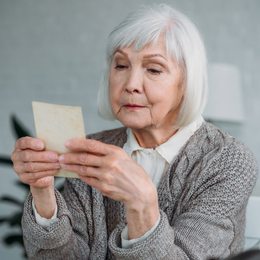
Still Close
How to stay connected to loved ones who have passed on.
My reading list over the past several years has led me to a lot of stories about aging, grief, and loneliness, and the intersection of all three. Of particular note: several poetry collections by the late U.S. Poet Laureate Donald Hall, The Last Chance Library by Freya Sampson, Flying Solo by Linda Holmes, and The Autumn Springs Retirement Home Massacre by Philip Fracassi, which, despite its coarse name, takes a tender-hearted approach to analyzing what it means to get older.
I suppose I shouldn’t be surprised by my reading list, as I have gotten to the point in my life where I have started thinking about and planning for what my final chapter will look like. Several life-changing events, including the deaths of my father, my mother-in-law, and the spouses of three friends, all of whom are several years older than I am, likely influenced my reading habits, too.
Some of those experiences no doubt played a part when I started writing a novel about a pair of retirees who abscond to a farmhouse in the northeastern corner of Arizona, hoping to outrun time, among other things. The novel, titled Find Your Way Back to Me, which was published in October, delves into the challenges and sacrifices associated with getting older; more so, the story explores how the connections we make with those we love most can endure, transcending the limits of space and time.
These connections came to mind after a recent visit to my father’s gravesite. Whenever I sit on the earth beside his headstone, I talk to him—half an hour, maybe 45 minutes if it’s been a while or if life has taken some unexpected turns. There’s no way for me to know if he’s listening, but I suppose the exercise is more for me than him, a way for me to feel close to him—and get some free therapy in the process—even though we haven’t seen each other in nearly a year and a half.
Talking to the deceased is apparently a good way to process grief. So says Larry Carlat, a grief coach who authored a February 2025 Psychology Today story, “How to Connect With Loved Ones After They Die.” He writes about the importance of letting deceased loved ones know how we feel, telling them how much we miss them, and, yes, even sharing jokes with them.
I cry quite a bit during those visits to see my father, but, to Carlat’s point, I find myself laughing, too—especially if my sister and I go together, as we tend to share stories about the funny things our father said or did.
I used to say my father and I shared a complicated relationship, but I now see that as a story I told myself. He and I didn’t always understand each other, which makes sense for two people who came from such disparate circumstances. As I look back, I see my father only in a positive light, even though he was as imperfect as the rest of us. Not only do I feel deeply indebted for everything he taught me, but also in awe of the job he and my mother did in raising their children.
Published (and copyrighted) in Suburban Life, November 2025.