
What Is Complete Health Dentistry?
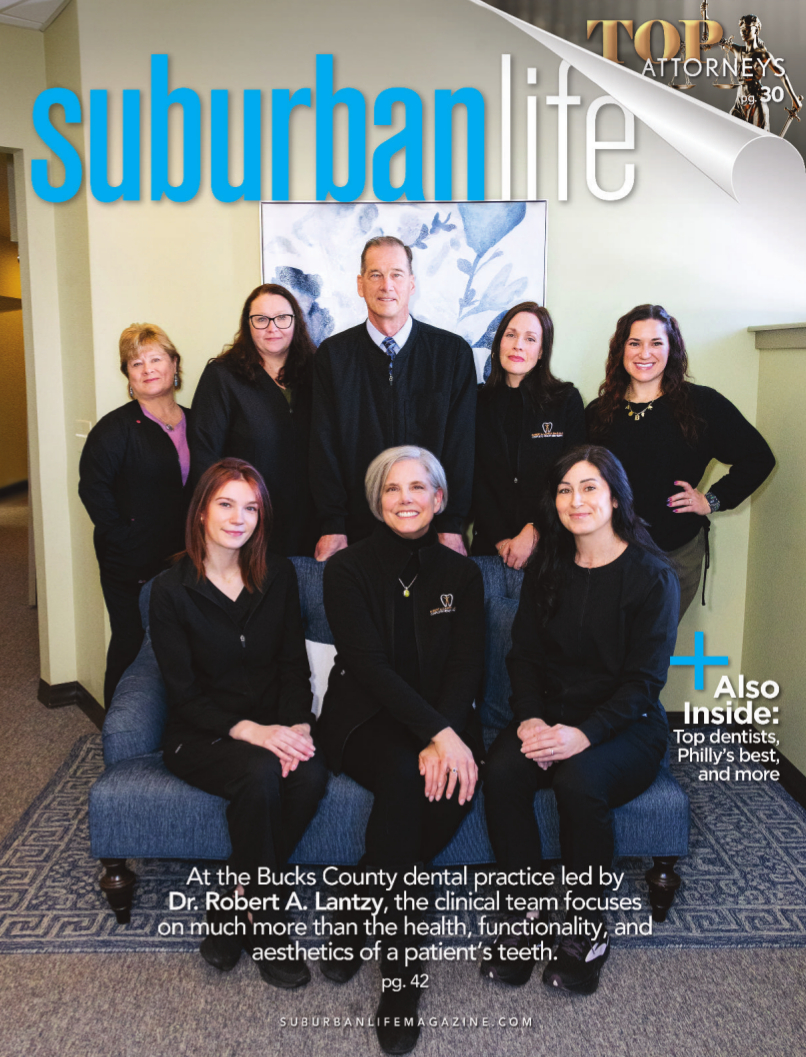
At the Bucks County dental practice led by Dr. Robert A. Lantzy, the clinical team focuses on much more than the health, functionality, and aesthetics of a patient’s teeth.
\I have practiced dentistry in Bucks County for nearly 40 years—long enough to know that when a new patient walks into my office for the first time, they expect me to talk about cleanings, fillings, or perhaps modalities to enable a brighter, straighter smile. Most don’t expect a conversation about their sleep, their posture, their blood pressure, or a child’s recurring sore throat.
Yet that is exactly what happens.
We have a name for what our practice does: Complete Health Dentistry. For me, dentistry has never been just about teeth. It is about the intricate relationship between the head, neck, airway, mouth, and the rest of the body. Over the years, I have seen too many patients whose symptoms were treated in isolation: the migraines addressed separately from tooth grinding; the high blood pressure that seems difficult to pinpoint; the child’s bedwetting dismissed as a phase. I knew there had to be a more thoughtful way.
When a patient sits in my chair for the first time, I explain that we are going to view their dental care through eight distinct lenses. That may sound clinical, but what it truly means is that we are going to slow down and pay close attention.
The first lens I look through is the patient’s health history: sleep, medications, stress, blood pressure, autoimmune conditions, etc. We start with the current medical condition and then, as we get into a thorough oral exam, we can see if there is any correlation between what is going on throughout the body and what we see in the oral cavity. The mouth does not exist in isolation, and neither should dentistry.
I then look at how the teeth come together, the occlusion, or what we call the bite. A misaligned bite can create tension in the jaw, strain in the neck, and years of wear that quietly erode enamel. From there I examine the oral mucosa—the inner cheeks, lips, and lining of the mouth—for evidence of oral cancer, because changes there can reflect systemic concerns.
Next comes the airway. Are the tonsils enlarged? Is there a visible obstruction? Is the architecture of the mouth too narrow to accommodate proper breathing?
The next lens is the tongue, which plays an astonishing role in breathing and swallowing, even our posture, so it’s important to recognize any issues that prevent optimal function. I then evaluate the gums for inflammation, which can be an early signal that a deeper problem may be brewing. The next-to-last lens is the bone, specifically how the teeth sit in the surrounding bone. Healthy bone is like the foundation of a home; without it, nothing stands securely.
Finally, I evaluate the tooth itself. Each tooth has six surfaces and three layers. I review the teeth looking for early weaknesses, small fractures, subtle changes that tell a story about problems they are likely to develop later on.
Sometimes these lenses reveal the need to go deeper. A patient may tell me they wake exhausted despite having “slept” for a full eight hours. I may notice worn-down teeth, a scalloped tongue, or a narrow palate. Perhaps the patient’s blood pressure has crept upward in recent years. In those cases, I often recommend a home sleep study—a discreet, ring-based technology worn in the privacy of a patient’s bedroom. The data is reviewed by a sleep physician, and together we assess the findings.
If a patient receives a diagnosis of obstructive sleep apnea, the gold standard remains CPAP therapy. But I also understand that many people struggle with the idea of sleeping attached to a machine. For patients who cannot tolerate CPAP, we offer dental sleep appliances that manage airway obstruction in a far less intrusive way.
For certain candidates, we take an even deeper dive with 3D radiographic imaging read by a radiologist. That imaging helps us determine whether a patient may benefit from the FDA-approved CARE (Complete Airway Repositioning and/or Expansion) appliance by Vivos Therapeutics. This device is designed to manage symptoms as well as to address the root cause of airway constriction by promoting structural change. Although it requires some commitment, the results can make a significant difference in the everyday life of an appropriate candidate.
Why do I go to these lengths? Because I have seen what happens when airway issues are ignored: chronic fatigue, cognitive fog, cardiovascular strain, mood changes, etc. When we improve sleep, we often improve lives.
The Power of Early Intervention
Complete Health Dentistry is not for adults only. In fact, some of my most meaningful work happens with children. A mother may bring in her child for a routine visit and casually mention that the child snores, grinds their teeth, or still wets the bed. I analyze their facial development, the width of their palate, and whether they breathe through their mouth or nose. Mouth breathing, especially in children, can lead to frequent colds, sore throats, and allergy-like symptoms because the nose—the human body’s natural filtration system—is bypassed.
Complete Health Dentistry is not for adults only. In fact, some of my most meaningful work happens with children. A mother may bring in her child for a routine visit and casually mention that the child snores, grinds their teeth, or still wets the bed. I analyze their facial development, the width of their palate, and whether they breathe through their mouth or nose. Mouth breathing, especially in children, can lead to frequent colds, sore throats, and allergy-like symptoms because the nose—the human body’s natural filtration system—is bypassed.
With guided growth and development appliances, we can gently expand a child’s airway and support healthier breathing patterns, often beginning as early as three or four years old. If a child has a tongue tie, collaboration with a myofunctional therapist can dramatically improve speech, eating, and nasal breathing. Early intervention is powerful. It changes the trajectory of health rather than trying to correct the disease later.
At our core, we remain a family preventive practice. We provide beautiful cosmetic dentistry, general restorative care, and meticulous hygiene visits. Even those routine appointments are elevated; at every dental health visit, each patient receives a progress report on their gum health, bone levels, bite stability, and airway observations. Many of my patients already have a prevention mindset; they appreciate data, clarity, and personalized maintenance plans, and they enjoy seeing their health trending in a positive direction.
My goal is simple: to put out the dental “fires,” to stabilize the foundation, and to guide each patient toward a higher level of wellness.
In Newtown and surrounding Bucks County communities, where residents balance family life, work, philanthropy, and self-care, our time and health are our most precious assets. When a patient tells me they are waking up refreshed for the first time in years, or that their child no longer struggles with chronic sore throats, I am reminded of why I chose this path.
Dentistry, at its best, is intimate. I see people up close. I notice what others may miss. And when we connect the dots—between the worn enamel and the restless sleep, between the narrow palate and the recurring infections—we move from reactive to proactive health care.
Complete Health Dentistry is a philosophy. It is the belief that your smile is not separate from your body, that inflammation anywhere deserves attention, and that root causes are worth seeking out and addressing directly. My promise to every patient is the same: We will look carefully, think comprehensively, and create a plan designed to not only protect your teeth, but also to support your life as a whole.
This is the kind of dentistry I do for my own family, and it is the kind I am proud to offer you every day.
Robert A. Lantzy, DMD, LLC
11 Friends Lane, Suite 100
Newtown, PA 18940
(215) 860-5901
www.buckscountydental.com
11 Friends Lane, Suite 100
Newtown, PA 18940
(215) 860-5901
www.buckscountydental.com
Photo by Alison Dunlap
Published (and copyrighted) in Suburban Life, June 2026.