
Welcome to the Family
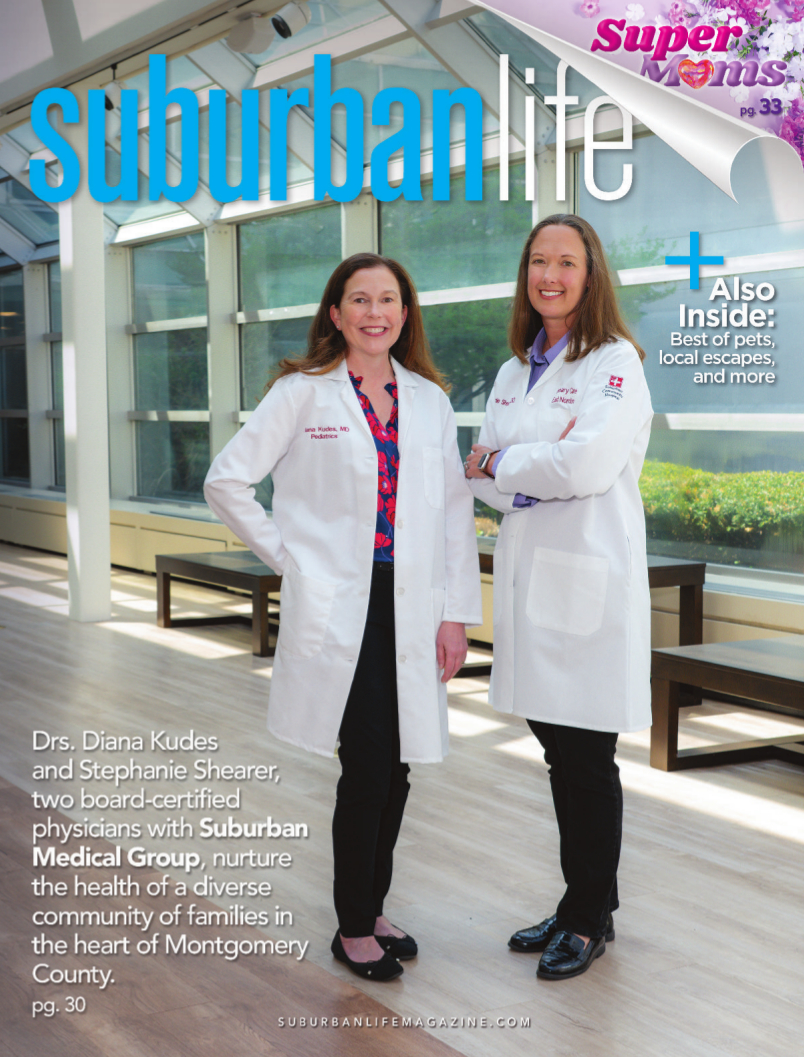
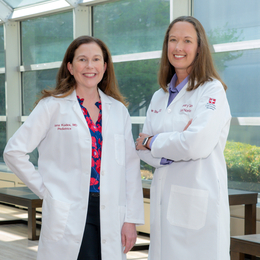
Drs. Diana Kudes and Stephanie Shearer, two board-certified physicians with Suburban Medical Group, nurture the health of a diverse community of families in the heart of Montgomery County.
For adults with chronic disease, having a usual source of primary care lowers the odds of having any hospitalization by 20 percent and any emergency department visits by 11 percent, according to a recent report from The Physicians Foundation. In other words, primary care can be life-changing, even life-saving.
“Primary care is important not only for treating chronic disease, but also for preventing it,” says Stephanie D. Shearer, D.O., a board-certified family medicine physician with East Norriton’s Suburban Medical Group at Suburban Behavioral Health Campus of Roxborough Memorial Hospital, which is part of Prime Healthcare. “Getting diagnosed with type 2 diabetes in your 40s doesn’t have to be the challenge a lot of people foresee it to be. It’s the same for conditions like heart disease. Preventative care means someone with heart disease is far less likely to have a cardiac event. We can keep people extremely healthy, even if they have chronic disease.”
Dr. Shearer practices patient-centered care, a collaborative approach to medicine designed to treat each patient based on their specific needs, values, and other personalized criteria. Rather than “telling patients what to do,” patient-centered care prioritizes shared decision-making and education. Dr. Shearer says patient-centered care involves working closely with patients and their families to “determine what their ultimate goals are and what they want out of the relationship [with a care provider].”
Dr. Shearer, who joined Prime Healthcare in 2021 after 15 years in private practice, sees patients ages five and up, though the balance of her patients are 40 or older. While some patients come to her for everyday issues of the “cough and cold” sort, others seek her expertise in managing, if not preventing, different forms of chronic illness.
Given the office’s location in the heart of Montgomery County, Dr. Shearer’s patients come from all ethnic and socioeconomic backgrounds, including underserved populations. Suburban Medical Group accepts almost every type of insurance, including Medicare and Medicaid, for ease and accessibility. It also offers special pricing options to help individuals without insurance receive care at a more affordable cost.
“Accessibility is very difficult these days,” Dr. Shearer adds. “My office used to be in Bridgeport, and one of the good things about moving to the hospital campus a few years ago is that we have become more accessible. Even if someone doesn’t drive, we are easy to reach by public transportation. We’re near the center of East Norriton, so we’re also closer to the pharmacy, the X-ray department, and other needs patients might have. Everyone deserves medical care, and we do our best to take care of them.”
Accessibility extends to telemedicine. Popularized during the COVID-19 pandemic, telemedicine remains a key part of Dr. Shearer’s practice. She says it has been especially helpful during periods of inclement weather.
“This past winter was horrendous, and I was still able to keep my regularly scheduled appointments with patients who either can’t drive or shouldn’t drive or couldn’t get a ride,” she says. “This area has a large aging population, so telemedicine has been great for them. I can do anything but put a stethoscope on your chest. We can go over your labs, talk about your concerns, and still be able to see each other face to face.”
Accessibility to high-quality medical care can make a significant difference in the lives of children, according to Diana B. Kudes, M.D., a board-certified pediatrician with Suburban Medical Group and a faculty member of the family medicine residency program at Roxborough Family Medicine.
“I love my patients, I love my families, and I know the community,” she says. “I’ve always liked helping people, particularly children. I love the idea of helping set someone’s whole life on a good trajectory, and I appreciate that Prime continues to want to do that for an underserved area in this little sliver on the edge of Norristown.”
Dr. Kudes has been in practice for more than 20 years and has been affiliated with Prime Healthcare since 2016. In her work as a pediatrician, she sees herself primarily as a teacher and a guide, “with a little social work thrown in,” she says.
“I see my own panel of patients every week, and those patients include children with the flu, infections, and other illnesses,” she says. “We also see a lot of childhood obesity and issues pertaining to mental health. I provide guidance for patients and their families, whether the patient in front of me is a newborn or a 15-year-old who is severely depressed.
“The rest of the time I’m working with family medicine residents,” she continues. “On any given day, I might be teaching someone who is treating a newborn for the first time. Most of the residents are enthusiastic, and I enjoy getting to see them grow. Teaching was always on my list when I was trying to decide what to do with my life, so it’s fun working with adult learners. They keep me motivated.”
As part of her work caring for local children, she strives to learn about new or little-known community resources that could help local families. For example, underserved families, including first-generation immigrants, might benefit from a local food pantry, a community center with a pool, or a new school program she learned about through her ever-growing network. She credits the influence of a few social workers she worked with earlier in her career.
“There are a lot of things that can affect someone’s health, and there’s only so much I can do with a prescription,” she says. “Getting out in the community and finding out about new resources or programs can make a world of difference in someone’s life. By doing that, I feel like I can make a big impact.”
The healthcare landscape continues to evolve in Montgomery County and throughout the region, and many health systems are experiencing some “growing pains” as a result. Even so, Drs. Kudes and Shearer believe some things will never change—including the fact that the bond between patients and their primary care providers is essential, if not irreplaceable.
“As long as the accessibility is there, we can do so much from a primary care standpoint to help people live longer, live better, and stay more active,” Dr. Shearer says. “I give a lot of credit to our staff, who have become an integral part of the community. The patients who call here know who answers the phone, and our staff can provide access to information—and access to me—almost immediately. That has been a positive change in the community.”
Suburban Medical Group at Suburban Behavioral Health Campus of Roxborough Memorial Hospital
2705 Dekalb Pike
East Norriton, PA 19401
suburbanmedicalgroup-pa.com
Suburban Medical Group at Suburban Behavioral Health Campus of Roxborough Memorial Hospital
2705 Dekalb Pike
East Norriton, PA 19401
suburbanmedicalgroup-pa.com
Photo by Jody Robinson
Published (and copyrighted) in Suburban Life, April 2026