

Soul of a Warrior
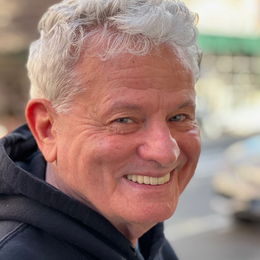
Thomas G. Waites, actor, director, and front man for the band Heartbreak Waites, reflects on his journey from Levittown to the limelight.
On a frigid night in January, my wife, Donna, and I pulled into the lot of Shankweiler’s Drive-In Theatre in Orefield, Pennsylvania, for a double feature of two horror classics: The Thing and The Shining. Thomas G. Waites was there, too—not in the car with us, of course, but on the screen.
In The Thing, John Carpenter’s masterpiece from 1982, Waites played the character of Windows, who succumbs in memorable fashion to the shapeshifting creature unearthed from the Antarctic ice.
To this day, The Thing is one of my top 10 films, as is 1979’s The Warriors, which also stars Waites. Naturally, I jumped at the chance to interview him.
Waites, who grew up in Levittown, has enjoyed a sprawling career that linked him to many legends of stage and screen: Wilford Brimley, Farrah Fawcett, Debbie Harry, Andy Kaufman, Al Pacino, and Kurt Russell, to name only a few. He has since honed his talents as an acting instructor, screenwriter, and director. (His 2023 film, a titillating sexual comedy called Target, is available on Amazon Prime.) He says he learned a lot about running a set from Carpenter—namely, to always maintain a sense of humor and to treat his actors with the utmost respect.
Waites likes to keep multiple irons in the fire, new projects to stir his excitement. Perhaps his greatest passion at the moment is his music. He leads a folk-rock-Americana band called Heartbreak Waites, which performed at New Hope Winery in Bucks County on June 7. His goal with his music: “to raise the vibration of the planet.”
Waites, now 71, remembers himself as a creative kid—and, admittedly, a bit of a troublemaker, until his trajectory took a dramatic turn. While studying at Bucks County Community College in Newtown, he won a scholarship to The Juilliard School in New York. Juilliard not only helped him refine his craft as an actor, but also planted the seeds for his career as a musician.
Although he now lives in New York, the Philadelphia area has played an outsized role in Waites’s life. His roots equipped him with one of his greatest strengths: a relentless work ethic.
“I am a determined sort,” he says. “When I want something, I’m like a bulldog with a bone in its mouth. I just keep banging on the door until it gives in. Here I am a septuagenarian protest singer, talking to you to try and get audiences to come and share my music.”
Following are excerpts of my hour-long interview with Waites, during which we talked about his struggles, successes, and other aspects of a journey that led him from Levittown to the limelight.
Q&A
You were early into your career when you were in The Warriors and The Thing, and then The Clan of the Cave Bear shortly after that. What was it like for you being a young guy, on set in places so far and different from the small working-class town where you were born and raised?
Here I was this kid growing up, thinking that the greatest job in the world was working in the steel mill, and there’s nothing wrong with working in the steel mill, but I am not a steel-mill guy. How does a person with artistic inclinations fit in to this working-class, blue-collar neighborhood? … I found my way through Shakespeare. Shakespeare is what got me out of there, and got me a scholarship to Juilliard where I was trained as an actor. Then all of a sudden I was catapulted into the world of Hollywood, which is quite an interesting place. There I am, 23 years old, shooting The Warriors, and we were in some rugged places: the Bronx, Brooklyn, Staten Island, Coney Island. Coney Island was probably the roughest place.
You were early into your career when you were in The Warriors and The Thing, and then The Clan of the Cave Bear shortly after that. What was it like for you being a young guy, on set in places so far and different from the small working-class town where you were born and raised?
Here I was this kid growing up, thinking that the greatest job in the world was working in the steel mill, and there’s nothing wrong with working in the steel mill, but I am not a steel-mill guy. How does a person with artistic inclinations fit in to this working-class, blue-collar neighborhood? … I found my way through Shakespeare. Shakespeare is what got me out of there, and got me a scholarship to Juilliard where I was trained as an actor. Then all of a sudden I was catapulted into the world of Hollywood, which is quite an interesting place. There I am, 23 years old, shooting The Warriors, and we were in some rugged places: the Bronx, Brooklyn, Staten Island, Coney Island. Coney Island was probably the roughest place.
Actors by and large, especially when they’re in a starring position or main character, are treated like children. This was a shock to me. For my first film, [I was] being flown first class, they do your dry cleaning, they do your laundry, they pay you per diem to eat, they pay you enormous amounts of money. It’s quite different from how I grew up—and I enjoyed being spoiled.
Setting was a huge factor in all three of those films—being on the ice for The Thing, and on the tundra and in the forest for The Clan of the Cave Bear. When you were in these places so far removed from Levittown, or Juilliard for that matter, did you ever think: What the heck am I doing here?
It’s one thing to go on adventures in the city. It’s another thing to go on adventures in these places—especially in The Clan of the Cave Bear—that hadn’t been touched since they were discovered. It was practically virgin territory. The immensity and beauty of nature was stupefying; you just looked around and saw nature at her grandest. In The Thing as well, in Hyder, Alaska, it was quite beautiful. Hyder was the base camp, and we would go to British Columbia for certain shots.
It’s one thing to go on adventures in the city. It’s another thing to go on adventures in these places—especially in The Clan of the Cave Bear—that hadn’t been touched since they were discovered. It was practically virgin territory. The immensity and beauty of nature was stupefying; you just looked around and saw nature at her grandest. In The Thing as well, in Hyder, Alaska, it was quite beautiful. Hyder was the base camp, and we would go to British Columbia for certain shots.
In The Clan of the Cave Bear, we spent a long time in those kinds of conditions, in caves; it was a brutal shoot. The Thing was a blast; it was like going to a party every day and getting paid for it. Because John Carpenter has this enigmatic way of veiling his will upon the actors without them ever knowing it and making it seem like you’re having fun, yet he’s getting a great performance out of everyone. And he happens to be a particularly kind human being that has been very generous and friendly with me throughout the years, and helped me out in a lot of different ways.
You mentioned being a creative kid who felt like he didn’t belong, looking for a place to fit in. You talked about Shakespeare being formative in your career. What was it about Shakespeare that unlocked something for you?
Life has a way of guiding us. I was not a good kid; the police had been to my house three times by the time I was 13. The universe sent a car to hit me and put me in the hospital for nine months. My femur was broken in half. … After I got out of the hospital, I’m in a body cast from the chest down, and my oldest sister, Kathleen—my personal hero in life, an amazing woman—took me to the drive-in to see Zeffirelli’s Romeo and Juliet. And I wept. And I wept for my life and I wept for the lives of all the people around me who were trapped in this kind of nightmare of, “You’re never going to get anywhere, you’re never going to be anything.” Philadelphia can be a tough place, as you know. I saw this film, Romeo and Juliet, and the next day I memorized the entire balcony scene, both characters, and I can do them to this day. And I used that to get a scholarship to Juilliard.
Life has a way of guiding us. I was not a good kid; the police had been to my house three times by the time I was 13. The universe sent a car to hit me and put me in the hospital for nine months. My femur was broken in half. … After I got out of the hospital, I’m in a body cast from the chest down, and my oldest sister, Kathleen—my personal hero in life, an amazing woman—took me to the drive-in to see Zeffirelli’s Romeo and Juliet. And I wept. And I wept for my life and I wept for the lives of all the people around me who were trapped in this kind of nightmare of, “You’re never going to get anywhere, you’re never going to be anything.” Philadelphia can be a tough place, as you know. I saw this film, Romeo and Juliet, and the next day I memorized the entire balcony scene, both characters, and I can do them to this day. And I used that to get a scholarship to Juilliard.
You went to Juilliard for acting, but it’s known mostly as a music school. At what point did music come into your life? Was it always there and you just tamped it down, or did it come about later?
First of all, I was stone tone deaf when I was 21 … but I had a director from the Moscow Art Theatre direct me in a play called The Lower Depths by Maxim Gorky. My character had to play the guitar and sing a very difficult Russian ballad—very difficult. So I spent $25 of your money on an Epiphone guitar. If you were having a party and wanted everyone to go home, you would ask me to play guitar and sing. But during the process of rehearsing that play, I learned that song. I was surrounded by the greatest musicians in the world, and they taught me painstakingly how to play the song. Then I learned I had a knack for [music]. It seemed like every play I was in, I had to play or sing, or both. I actually did a musical on Broadway with Deborah Harry in 1983, called Teaneck Tanzi, which was so bad it almost closed at intermission. People left in rows, but not because of Debbie; she was fantastic to work with. … It was Andy Kaufman’s last performance, lovely man.
First of all, I was stone tone deaf when I was 21 … but I had a director from the Moscow Art Theatre direct me in a play called The Lower Depths by Maxim Gorky. My character had to play the guitar and sing a very difficult Russian ballad—very difficult. So I spent $25 of your money on an Epiphone guitar. If you were having a party and wanted everyone to go home, you would ask me to play guitar and sing. But during the process of rehearsing that play, I learned that song. I was surrounded by the greatest musicians in the world, and they taught me painstakingly how to play the song. Then I learned I had a knack for [music]. It seemed like every play I was in, I had to play or sing, or both. I actually did a musical on Broadway with Deborah Harry in 1983, called Teaneck Tanzi, which was so bad it almost closed at intermission. People left in rows, but not because of Debbie; she was fantastic to work with. … It was Andy Kaufman’s last performance, lovely man.
Photo courtesy of Thomas G. Waites
Published (and copyrighted) in Suburban Life, May 2026
Published (and copyrighted) in Suburban Life, May 2026