
Breaking New Ground
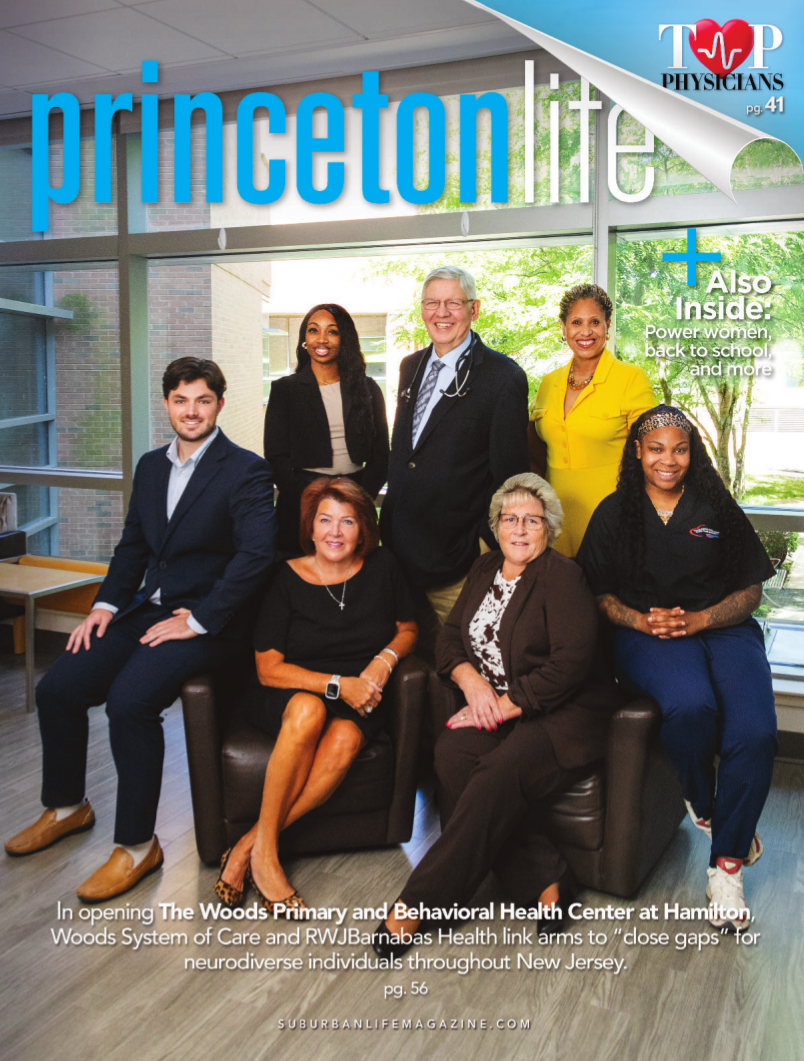
In opening The Woods Primary and Behavioral Health Center at Hamilton, Woods System of Care and RWJBarnabas Health link arms to “close gaps” for neurodiverse individuals throughout New Jersey.
Few things are more discouraging than a vital need that goes ignored or unfulfilled. Regrettably, many individuals with intellectual and developmental disabilities and autism know this disappointment all too well, as they have long been underserved or denied access to high-quality healthcare.
Woods System of Care has gone to great lengths to reverse that trend. In 2018, Woods opened The Medical Center at Woods, an integrated care facility in Langhorne. Under the umbrella of Woods Integrated Healthcare, the medical center works closely with the Center for Behavioral Health and Penn Dental Medicine at Woods to significantly improve patients’ outcomes by delivering world-class medical, dental, and behavioral care for all stages of life, tailored to each person’s precise needs and situation. Penn Dental Medicine at Woods represents a vital partnership with the University of Pennsylvania School of Dental Medicine.
Woods has since set its sights on Mercer County, New Jersey. Last year the organization opened the Woods Primary and Behavioral Health Center at Hamilton in partnership with RWJBarnabas Health. As the first-of-its-kind outpatient clinic in the Garden State, the Hamilton clinic aims to close longstanding gaps in healthcare for underserved New Jersey residents, from New Brunswick to Cape May. The clinic, which is located inside Robert Wood Johnson University Hospital Hamilton (RWJUH Hamilton), an RWJBarnabas Health facility, celebrated its grand opening in November 2025.
“It has been an amazing partnership,” says Stephen J. Kolesk, M.D., Chief of Family Medicine at Woods Integrated Healthcare and Medical Director of the Hamilton clinic. “RWJBarnabas Health is the biggest health system in New Jersey, so it has a lot of capabilities, including specialty care and a children’s hospital. In Mercer County and surrounding counties, there aren’t a lot of practices like us. We have quickly developed a reputation for not only being very caring in the work we do, but also for delivering outstanding care.”
RWJBarnabas feels the same way about the alliance. RWJUH Hamilton Chief Administrative Officer Lisa Breza says, “Woods System of Care’s long history and experience align perfectly with the hospital’s nursing care model of patient-centered care, and we are proud to provide seamless access to our services and specialists within the system to this population in the communities we serve.” Deanna Sperling, President and CEO of RWJBarnabas Health Behavioral Health Center and Senior Vice President of Behavioral Health Services for the system, says, “The partnership shows what can happen when organizations come together with a shared purpose to remove barriers and innovate, blending physical and behavioral healthcare.”
The Woods Primary and Behavioral Health Center at Hamilton offers primary care, behavioral health, sick visits, chronic disease management, and medication management, among other services. The clinic has also applied for an integrated care license, meaning the list of services will likely expand in the near future.
The Hamilton clinic is closely modeled after The Medical Center at Woods in Langhorne. That facility has made a measurable impact on overall health outcomes for neurodiverse individuals in the community, including a 20 percent reduction in emergency-room visits and a 40 percent drop in hospitalizations. Both clinics support individuals on the cusp of adulthood as they make the transition from pediatric to adult healthcare, which is important because adults with intellectual and developmental disabilities often lack a sufficient support system.
Challenging Yet Rewarding
When Woods began considering partners for the clinic partnership, Dr. Kolesk says RWJBarnabas Health was the logical choice. Among the many reasons why is RWJBarnabas Health’s vast network of specialists, when and if needed. If a patient is admitted to the hospital, Dr. Kolesk can easily track their progress and, more importantly, share any important patient details with fellow care providers.
“I have no qualms about calling whoever is taking care of the patient and saying, ‘This is what’s going on, this is what you need to know,’” he adds. “People with intellectual and developmental disabilities don’t always respond the way other folks respond. Someone who hasn’t spent a lot of time with [neurodiverse patients] might not understand that the patient is acting hostile or belligerent either because they are scared or because they have a medical issue, not because they have a behavioral issue. That’s the difference.”
This lack of understanding among healthcare providers may explain why, even in 2026, barriers to true equity in healthcare persist. To address these barriers, Dr. Kolesk and other Woods colleagues are actively teaching future generations of doctors, nurses, and other healthcare professionals how to better serve neurodiverse populations. Woods works with numerous medical schools to offer residencies and internships, and offers training to providers and hospitals.
Experience working with neurodiverse populations is essential when Woods brings on new talent. While such expertise is vital, Woods also seeks individuals who possess traits such as kindness and the ability to make people feel seen and heard—in other words, someone like Practice Manager Ethan Diamond.
“This is a patient population that requires a lot of patience and attention to detail,” he says. “You also have to be willing to go the extra mile. There are a lot of extra steps that come into play, whether it’s an additional phone call or reaching out to the family about the results of blood work. You need to be a person who believes the most important person is the one who’s walking in the door.
“The work grounds you,” he continues. “When you work with the kind of people you work with here, and serve the people you serve, it becomes so much more than a job.”
The work can be challenging at times, Dr. Kolesk admits, yet he says his years at Woods have been among the most rewarding of his long career in medicine. While the clinic is open Monday through Friday, from 8:30 a.m. to 5 p.m., individuals in the community can expect to have their needs met on a 24-hour basis, according to Dinetta Armstrong, Senior Vice President of Health Services for Woods Healthcare and Executive Director of The Medical Center at Woods in Langhorne. Besides in-clinic visits, providers offer telehealth services.
“These providers have availed themselves to the community, to ensure that individuals have the ability to connect with a primary care provider without having to go to the hospital,” says Armstrong, who has devoted her career to helping underserved and marginalized communities. “It’s amazing to have the level of service and responsiveness that Dr. Kolesk and his team have been able to provide. We have become an extended hand.”
Families coming to The Woods Primary and Behavioral Health Center at Hamilton for the first time can expect to find an elegant space built to ensure the comfort of patients and their families. This includes a waiting area featuring sensory items, large exam rooms to accommodate caregivers, wide hallways to allow easy navigation for wheelchair users, and specialized medical equipment designed to make each appointment as efficient and stress free as possible.
Diamond offers a few parting words for prospective patients and families: “We’re ready for you. We have timely appointments, and we take your insurance, including Medicaid. We will do everything we can to make you feel welcome, to make the visit easier, and to have you leaving happier than when you came in.”
Woods Primary and Behavioral Health Center at Hamilton
1 Hamilton Health Place, Suite 501
Hamilton, NJ 08690
1 Hamilton Health Place, Suite 501
Hamilton, NJ 08690
(609) 249-7688
Photo by Alison Dunlap
Published (and copyrighted) in Suburban Life, August 2026.