The Best Is Yet to Come
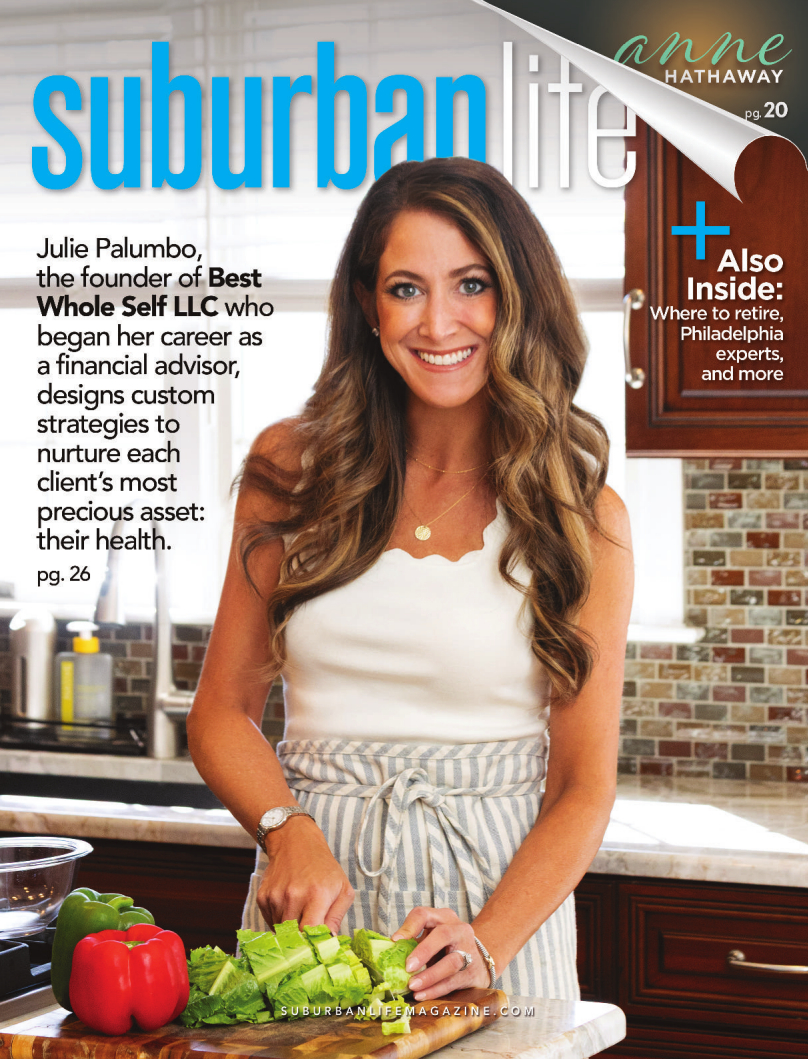
Julie Palumbo, the founder of Best Whole Self LLC who began her career as a financial advisor, designs custom strategies to nurture each client’s most precious asset: their health.
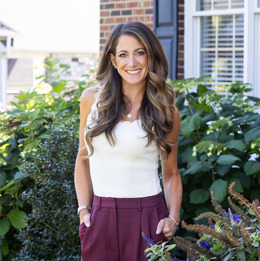
Julie Palumbo, NBC-HWC, knows a few things about the restorative power of personal transformation.
Palumbo spent a decade working as a financial advisor before a personal health crisis spurred her to become a health strategist and nutritionist. Today, as the founder and CEO of Best Whole Self LLC in Bucks County, she uses her expertise to help others transform their health and, in the process, their lives.
“For a long time, we’ve treated health as something we address when something goes wrong,” she says. “I’d like to help change that mindset. There is so much value in being proactive, whether that means improving your nutrition, building strength, managing stress, prioritizing sleep, or simply paying closer attention to how you feel.”
She also wants people to know that a healthier life is within reach, regardless of how busy they may be. Most of her clients already have full schedules, with demanding careers, families, and other responsibilities. Rather than trying to create a “perfect” wellness routine, she works closely with clients to, in her words, “make their health a priority within the life they’re already living.”
Suburban Life interviewed Palumbo about a range of topics, including the unanticipated evolution of her career, what clients can expect from working with her, and how her approach enables clients to maintain their results over the long term.
Q&A
How did your own health issues lead you down the path to becoming a health strategist and nutritionist?
I spent about 10 years working as a financial advisor, and during that time I was also navigating my own health challenges. I was diagnosed with Crohn’s disease in 2009, and eventually underwent a partial colectomy in 2014. That experience really changed the way I looked at health. I started learning as much as I could about nutrition and the role our everyday habits can play in how we feel. I became a Certified Nutrition Consultant in 2015 and a Certified Holistic Health Coach shortly after, initially because I wanted to better understand my own health. Eventually, I realized this was work I wanted to do for other people, too. As I continued to grow in the field, I became a National Board Certified Health and Wellness Coach, which is the highest standard of professional certification in health and wellness coaching.
My background in finance has influenced my work more than I ever expected. As a financial advisor, I helped people look at where they were, where they wanted to go, and develop a strategy to get there. That’s essentially what I do now with their health. I don’t believe most people need more information about what is “healthy”; they need a realistic strategy for making it work within their actual lives. That’s ultimately why health strategist became the perfect way to describe what I do.
You work with men and women alike. Do you find that a man’s goals differ significantly from a woman’s, and does your approach change as a result?
The goals can certainly be different, but I find there are often more similarities than differences. Many of the men I work with are successful professionals who are very driven in their careers, but at some point realize their health hasn’t received that same level of attention. They may want to lose weight, build strength, improve their nutrition, have more energy, sleep better, or simply feel like they’re performing at their best again.
What I enjoy about working with male clients is that many respond really well to having a clear strategy. They don’t necessarily want their lives to revolve around wellness; they want to know what changes are going to make the biggest difference and how to realistically implement them. That’s very much how I approach health coaching.
Ultimately, though, I don’t coach someone differently simply because they’re a man or a woman. I coach the individual in front of me. Someone managing a chronic illness is going to have different considerations than someone focused on strength and performance. A working parent may need a completely different strategy than an executive who travels several days a month. That’s why I don’t use a one-size-fits-all approach.
What can clients expect from the process and, more importantly, results in terms of how they feel, look, and function?
Every client starts with a comprehensive health assessment because I want to understand the full picture before we decide where to focus. Nutrition is certainly part of that, but we also look at sleep, movement, stress, energy, emotional health, routines, and the demands of their everyday life.
From there, we create specific, manageable goals and adjust them as we go. Results look different for everyone. Clients may lose weight or change their body composition, but they may also sleep better, have more consistent energy, feel stronger, manage stress differently, improve their relationship with food, or finally feel like their healthy habits fit into their lives instead of competing with them. To me, those are equally important measures of progress.
You also have corporate packages to help companies improve their teams. What do companies have to gain from these efforts?
Companies spend a tremendous amount of time thinking about performance, productivity, and retention, but the health of the people doing the work is directly connected to all three. My corporate work includes workshops, cooking demonstrations, group coaching, one-on-one coaching, wellness office hours, and longer-term programming.
When employees have tools to manage stress, improve their energy, sleep better, eat well, and take care of themselves within a demanding work environment, they’re better equipped to show up both professionally and personally. Companies also have an opportunity to demonstrate that employee wellbeing is something they genuinely value, rather than something they talk about once a year during a wellness week.
Many people who want to lead a healthier lifestyle often find themselves struggling to sustain momentum, and their results wane over time. How does your approach help clients stay healthy for the long term?
This is really at the center of my work. I don’t want someone to be successful because they’re working with me; I want them to develop the skills and habits that allow them to continue being successful when they’re not [working with me].
I think one reason people struggle with consistency is because they try to change too much at once. They follow a very rigid plan, life inevitably gets in the way, and suddenly they feel like they’ve failed. Instead, we look at what is realistic and sustainable within someone’s actual life.
I often tell clients that the goal isn’t perfection; it’s having a strategy for what happens when life isn’t perfect. Vacations happen, work gets busy, your kids get sick, and holidays happen. Your routine is going to change, so if your approach to health only works under ideal circumstances, it isn’t really sustainable. Over time, those smaller decisions and habits become something clients know how to adapt rather than something they have to continually start over.
What are your goals going forward, for Best Whole Self and other aspects of your life?
For Best Whole Self, I want to continue expanding the corporate side of the business and developing longer-term partnerships with companies that want wellness to be part of their culture, not just a one-time event. I also want to continue working individually with professionals and executives, because I value the depth of that one-on-one work.
More broadly, I want Best Whole Self to continue evolving beyond the idea that health coaching is simply about nutrition or weight loss. My goal is to help people understand that their health is an asset, and the way they take care of it affects how they show up in every other area of their lives.
Personally, success for me also means continuing to build a business I love while being present for my family. I’m a wife and a mom of three, and I’m not interested in promoting a version of wellness that requires your life to revolve around being healthy. I want a full life, and I want my clients to have one, too. Health should support that life.
Photo by Alison Dunlap
Published (and copyrighted) in Suburban Life, October 2026