Moving the Needle
Meet Max Kopp, a 19-year-old CEO and founder of a nonprofit devoted to improving life for people with diabetes.
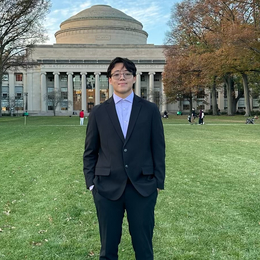
Max Kopp, a Germantown Academy graduate who turned 19 in late September, recently started his freshman year at Rice University in Houston. For Kopp, who established a nonprofit foundation and a for-profit company at only 17, college is more than a rite of passage. Rather, it’s a way to establish a concrete foundation for his goal: to relieve the suffering of those who have diabetes.
For years Kopp witnessed family members go through the painful and tedious process of using small needles to check their blood-sugar levels. Eventually, he became inspired to revolutionize the process—by listening to each of their experiences and helping them take the lead.
The Kopp Foundation for Diabetes (KFD) primarily focuses on the young, who are the most impacted by Type 1 diabetes. The organization is heavily involved with innovation, equity, and youth empowerment. Likewise, Kopp’s for-profit company, VitaSensor, remains dedicated to the foundation’s pillar of equity by making its products affordable and comfortable for its customers. The noninvasive glucose-monitoring technology utilizes AI-based algorithms to provide accurate glucose readings without needles.
Q&A
You witnessed firsthand the struggles of diabetics within your family. When did you decide that there needed to be a change?
I really decided, when I was in my sophomore year of high school, and I didn’t really know what to do career-wise. And that’s when I started getting into the science fair. With this thing in the back of my mind of diabetes as a subject of research, I really wanted to research into that. That’s when I discovered, or I looked into the idea of, noninvasive and continuously monitoring glucose sensors for people with diabetes.
And that’s when I did a bunch of research and worked on it with the idea of photoplethysmography, which was monitoring glucose levels through the use of light, because glucose is optically active. So, when you shine light at it, the angle of the light changes. So, based off the proportionality of the angle change, you then determine how much glucose is within the system. … It was already an established science, just like with photoplethysmography itself, but wasn’t really applied to the field of glucose monitoring.
A company named Crown Wealth LLC has supported you on your journey. How did they mentor you and help you? What challenges did you face along the way?
I would say after the science fair, I realized it could be a project that could become a reality, which is when I started participating in entrepreneurship competitions. And then through that, I met a bunch of people. I would talk to the coaches and people who would be judging these events. That’s how I found Crown Wealth. And through that, they provided me with mentorship, just how to navigate the space, what to do in certain areas, such as helping with things like patents. And I reached out for help whenever I would be either confused or new to something.
Your technology could change the course of treatment for various chronic illnesses. How do you feel about that at only 18?
I also started a nonprofit for people with diabetes, specifically youth focused. But I think it’s sort of a double-edged sword, because older people may not believe in you or things like that because of your age. I think [being so young] allows me to absorb information with a new perspective than a lot of people that have been in the space for a while.
NASA and elite universities reached out to you as well. Can you describe your experience with that?
The NASA connection was a different research project than the diabetes glucose monitors. They were continuously monitoring through printable technology with nanomaterials. I tried applying that to maybe spaceship sensors, so printable nanomaterial sensors. That’s when I reached out to them. As for the universities and things like that, that was when I was searching for grants. I’d be recommended by the science fair, and the scientists there that would look into it would say, “Oh, if you want to create this, or if you want to make this a real thing, that’s a great website! You should reach out to that.” That’s where that came from.
What are your future plans now?
The future plans, well, going into college and everything like that, I’m really working with KFD. You know, setting up a chapter there and really expanding into the Houston, Texas, area as well. Right now, for VitaSensor, which is my for-profit, creating these sensors, just keeping along with the process because we’re in the engineering and testing phase.
Photo courtesy of the Kopp Foundation for Diabetes
Published (and copyrighted) in Suburban Life, October 2026