
Building Personal Connections
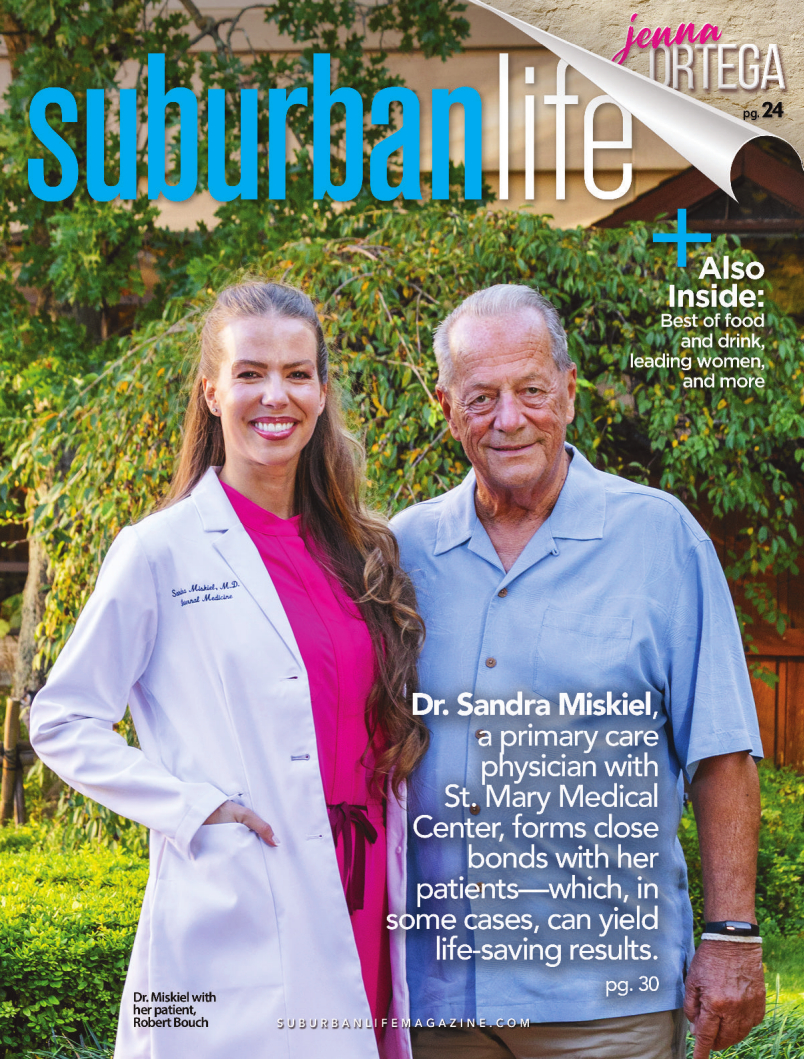
Dr. Sandra Miskiel, a primary care physician with St. Mary Medical Center, forms close bonds with her patients—which, in some cases, can yield life-saving results.
Sandra Miskiel, M.D., moved back home to Bucks County because of a desire to practice relationship-based, community medicine, the same way her father had. Patients like Robert Bouch serve as proof that she is exactly where she’s supposed to be.
Dr. Miskiel was just a little girl when she started going on rounds with her dad, a hematologist/oncologist. She was inspired to follow in his footsteps and become a physician, attending medical school in Poland and later living in Italy before deciding she wanted to return to her roots. She is now a primary care physician at St. Mary Medical Center, which is fitting considering she was born at the hospital.
“I chose primary care because I wanted to be there for patients before an illness begins, not just after it arrives,” she says. “Most physicians tend to meet patients at a turning point, whether it’s a diagnosis, a procedure, or a crisis. As a primary care physician, I get to know my patients long before that moment, and that relationship gives me an opportunity to change their story.”
No patient better illustrates the point than Bouch, who Dr. Miskiel struck a close friendship with during her residency at St. Mary, when he was part of the hospital’s security team. After she went into primary care, he quickly scheduled an appointment.
“I can’t say enough kind words about her,” Bouch says. “I’ve seen her coming off overnight shifts, after working 18 hours, and she always had a smile, a hello, and a hug. That meant more to me than anything, and we developed a great friendship.”
Their bond, which continued to strengthen as they became doctor and patient, proved critical this past January, when Bouch contacted Dr. Miskiel about chest pains he was experiencing that sounded like heartburn. Because he was reluctant to visit the ER, she had him come to her office right away for an examination and EKG, which showed no abnormalities. But something seemed off during their conversation, so she ordered an additional blood test. The results revealed elevated troponin levels, a sign of heart injury. Dr. Miskiel was finally able to convince him to get to the hospital.
“They admitted me and the next day they put a stent in,” he says. “She basically saved my life, because my ‘widowmaker’ [a nickname for the left anterior descending artery] was 99 percent blocked. For that, I will be forever grateful.”
While extreme, his case underscores the importance of having a relationship with a primary care physician like Dr. Miskiel, who can recognize the subtle changes from a patient’s baseline condition that might make all the difference.
“A physician unfamiliar with Bob or his history might have chosen to monitor his symptoms and schedule a cardiologist appointment,” she says. “I believe knowing my patients on a personal level, and treating them as I would my own family and friends, makes a difference. I think about how I would want my mom to be cared for—by someone who advocates for her, as I did for Bob. Sometimes, attention to the smallest details can have a life-saving impact.”
In the ensuing months, Dr. Miskiel has developed a comprehensive plan for Bouch that includes improved diet, regular exercise, and a completion of cardiac rehabilitation. Since losing more than 44 pounds, he feels “awesome” and gives much credit to his doctor.
“She’s a loving physician who cares about her patients,” he says. “Not everyone has that relationship with their physician. I trust her, and in today’s medical profession, that’s a very hard thing to do.”
Dr. Miskiel considers it an honor to be serving the community where she grew up, and where her late father once bonded with his patients in a similar fashion. She loves the ability as a primary care physician to treat the whole body, to focus on how all of the different systems interconnect, and for giving patients a blueprint for a long, healthy life.
“Longevity is my goal for every patient, and that means more than a longer life; it means a better one,” she says. “It’s what we call health span: the years you spend healthy, active, and independent. It’s not determined by any one habit, but by how we eat, move, sleep, and connect. Prevention is how we protect those years, and every healthy choice that we make is an investment in the future.”
St. Mary Medical Center
1201 Newtown-Langhorne Road
Langhorne, PA 19047
(215) 750-7150
Photo by Alison Dunlap
Published (and copyrighted) in Suburban Life, November 2026